
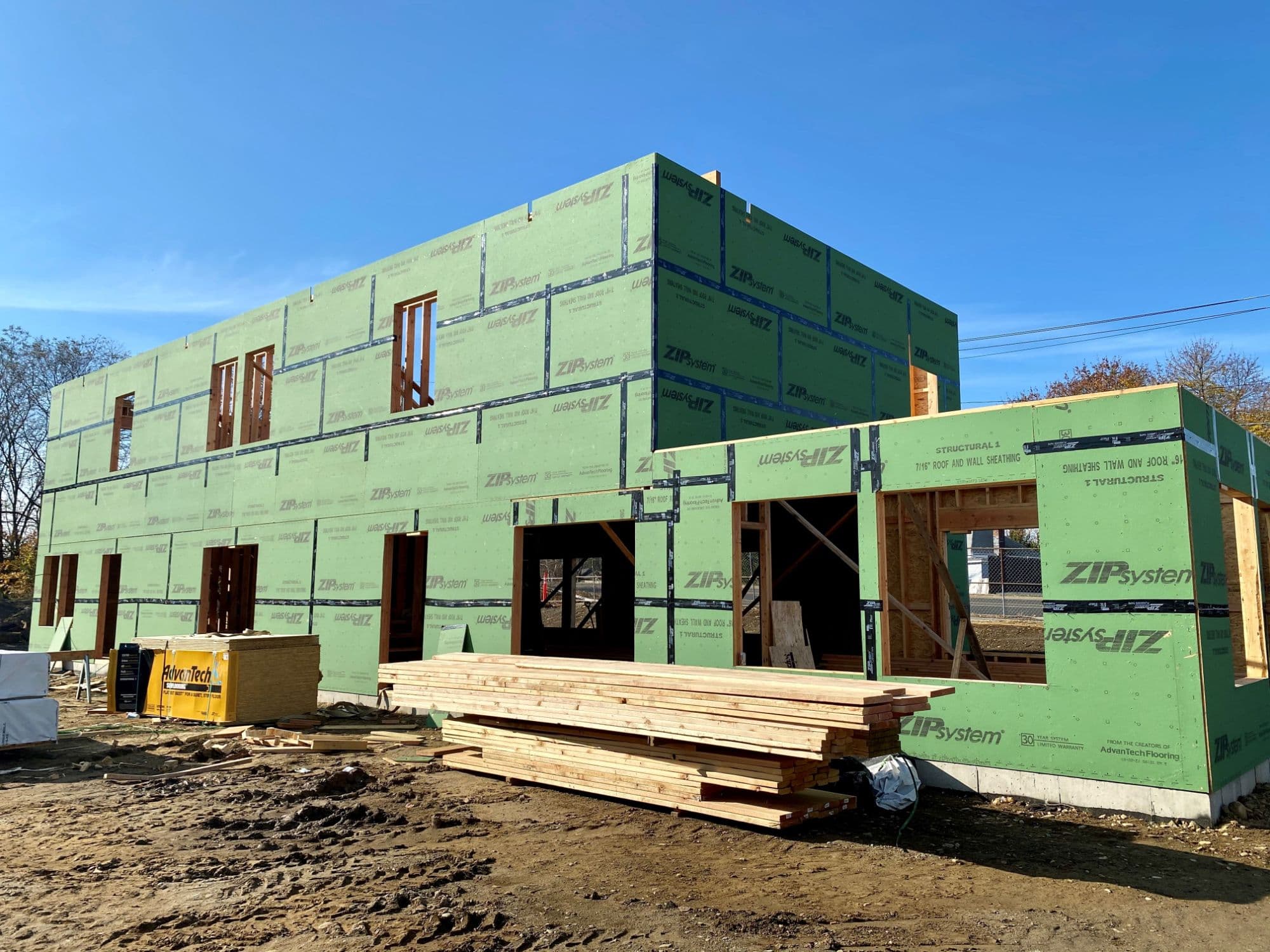
The short answer: most home additions in Connecticut land between $300 and $550 per square foot of finished space in 2026, which puts a typical project anywhere from $90,000 for a modest single-room bump-out to well over $500,000 for a full second story. That’s a wide range, and the honest reason is that no two additions carry the same structural, site, and finish requirements. Here’s how the numbers actually break down, based on what we see building additions across Milford, New Haven, and Fairfield counties.
2026 Cost Ranges by Addition Type
Second-Story Addition: $250,000 - $550,000+
Adding a full second floor to a ranch or Cape typically runs $300 to $500 per square foot. The premium comes from removing the existing roof, verifying the first-floor framing and foundation can carry the new load, keeping the house weathertight mid-build, and usually relocating your family for part of the project. On a 1,200 square foot footprint, budget $350,000 to $500,000 for a complete, finished second story.
In-Law Suite / ADU: $125,000 - $350,000
An attached in-law suite with a bedroom, bathroom, and kitchenette usually falls between $125,000 and $250,000. A detached accessory dwelling unit costs more, typically $250,000 to $350,000, because it needs its own foundation, utility connections, and full building envelope. Connecticut’s statewide ADU legislation pushed many towns to allow accessory units as-of-right, but each town’s rules on size, parking, and owner occupancy differ, so zoning review is step one.
Primary Suite Addition: $130,000 - $275,000
A 400 to 650 square foot primary bedroom with a full bath and walk-in closet is one of the most requested additions we build. The bathroom is what moves the number: tile work, plumbing, and fixtures can account for $40,000 to $70,000 of the total on their own.
Garage Addition: $50,000 - $220,000
A detached two-car garage on a slab typically runs $50,000 to $110,000 in Connecticut. An attached garage with finished bonus space above, which is a popular way to get a home office or guest room out of the same foundation, generally lands between $130,000 and $220,000.
What Actually Drives the Cost
- •Foundation type: A slab is the cheapest way to get out of the ground. A crawl space adds roughly 15 to 25 percent to foundation cost, and a full basement more than that. Hitting ledge rock during excavation, which is common in parts of Woodbridge, Orange, and Trumbull, can add $10,000 to $30,000 in blasting or hammering.
- •Structural engineering: Any addition that loads the existing structure, and every second story, needs stamped engineering. Plan on $2,500 to $8,000 for design and engineering, more if the existing framing needs reinforcement before the new work can start.
- •Tying into the existing roofline: This is where cheap additions show their seams. Matching pitches, building valleys correctly, and flashing the connection so it never leaks takes real carpentry and roofing skill. A poorly tied-in roof is the single most common failure point we get called to fix on additions other contractors built.
- •Permits and approvals: Most CT towns charge building permit fees in the range of $15 to $25 per $1,000 of construction value, so a $250,000 addition carries roughly $4,000 to $6,000 in permit costs. Additions near wetlands, in coastal zones, or that push setback lines can also need zoning or inland wetlands approval, which adds weeks to the schedule.
- •Kitchens and baths: Wet rooms are the most expensive square footage in any house. An addition that includes a bathroom or kitchenette will always cost more per foot than bedroom or living space.
Why One General Contractor Beats Piecing It Out
Some homeowners try to save money by acting as their own GC: hire an excavator, then a foundation crew, then a framer, and so on. On paper the math looks good. In practice, an addition is one continuous structure where the excavation has to match the foundation plan, the foundation has to match the framing, and the framing has to land exactly where the roof tie-in and mechanical runs need it. When each trade only owns its own slice, gaps between them become your problem, and schedule slips compound because no single party is accountable for the handoffs.
A full-service general contractor carries that accountability end to end: one contract, one schedule, one point of responsibility for the permit, the inspections, and every trade on site. At PRC Builders we self-perform the carpentry with our own W-2 crews rather than chaining the work through layers of subs, which is a big part of how the roof tie-ins and finish details come out right. It’s the same approach we take on full-scale remodels and ground-up construction.
When an Addition Beats Moving
With Connecticut inventory still tight and selling costs eating 8 to 10 percent of your sale price between commissions, conveyance taxes, and moving expenses, the move-versus-improve math has shifted toward staying put. If you bought or refinanced when rates were low, trading that mortgage for a new one adds real monthly cost on top of the purchase price of a bigger house.
The addition usually wins when you like your location, your lot has room to grow, and the house’s bones are sound. Moving usually wins when the lot itself is the constraint, when zoning won’t allow the expansion you need, or when the existing structure would need so much corrective work that you’re better off starting over. If you’re in that last category, read our guide on remodeling versus teardown and rebuild, because a rebuild on a lot you already own is sometimes the smartest play of all.
How to Budget Realistically
Get a real design before you get attached to a number. Set aside a 10 to 15 percent contingency for what opens up once walls do. And treat any bid dramatically below the ranges above with suspicion, because in this market that gap is usually made up later in change orders or corners cut where you can’t see them.
Planning an Addition?
PRC Builders designs, permits, and builds additions across Southern Connecticut with our own W-2 crews. Licensed (HIC.0661478, NHC.0016349), $2M insured, and backed by 25 five-star Google reviews. Let’s talk through your project and put real numbers to it.